
The Culling Problem in 2026
Culling — the process of sorting thousands of captures down to the final keepers — is the single largest time-sink in modern photography. A wedding wedding shooter returns 4,000-8,000 frames to a client. A commercial product shooter runs 600-1,500 frames per catalog job. A portrait shooter can shoot 800 in a single session.
At a typical 2-3 seconds per frame for a focused human review, a 4,000-frame wedding is 2.5-3.5 hours of pure culling time before the editing even begins. For a working photographer billing ₹8,000-15,000/hour, that is a non-billable cost or a billable line item the client is starting to question.
AI culling tools promise to cut that time by 70-90%. In my Dehradun studio, I have run real client shoots through every major tool. This is what actually works.
How AI Photo Culling Actually Works
Before ranking tools, it helps to understand what they are doing under the hood, because the differences between tools are mostly about which signals they prioritize.
Technical Detection
Blur, focus misses, exposure problems, camera shake. Most AI cullers score this very accurately — over 95% match with human judgment on hard technical rejects.
Eye & Expression Detection
Open eyes, smiles, blink detection, group consistency. Strong on Aftershoot and Imagen; weak on Evoto and older tools. Critical for portrait and wedding work.
Composition Scoring
AI scores 'composition quality' based on rule-of-thirds, leading lines, symmetry. The weakest signal — AI consistently misses the candid frame between two posed frames that is the actual hero shot.
Duplicate / Burst Detection
Groups near-identical frames from a burst sequence and keeps the best. Highly reliable across all tools. Where AI shines.
Subject & Face Grouping
Identifies the same person across frames to ensure coverage. Useful for events and group portraits where you need at least one frame of every guest with their eyes open.
Tools that combine technical detection with strong eye/expression analysis score highest for portrait and wedding work. Tools that prioritize technical detection score highest for product and commercial work where expression is not the variable.
The 6 AI Culling Tools Worth Your Time
Ranked by what I actually use at my Dehradun studio for the specific shoot types each tool serves best. Anything not on this list did not survive the 18-month test.
Aftershoot
Best for: Wedding, event, portrait photographers shooting 2,000+ frames per job
India pricing: $0.04-0.10 per image (pay-as-you-go); $15/month unlimited (Cull subscription)
Aftershoot is the most accurate expression-and-eye AI culler in 2026. Its group-keep logic — ensuring you have at least one good frame of every subject with eyes open — is the killer feature for weddings and corporate events. On a 4,000-frame Indian wedding, Aftershoot cut my culling time from 3 hours to 25 minutes. The 5% it loses are the candid hero moments between two technically-correct frames — which is exactly why you still review the AI-rejected picks before final delivery.
Best overall AI culler for high-volume portrait and event photographers.
Imagen AI
Best for: Lightroom Classic photographers who want cull + edit in one pipeline
India pricing: From $0.05 per image; subscription plans from $30/month
Imagen's edge is workflow integration. You cull and edit in the same Lightroom Classic session. The AI learns your editing style from 3,000+ of your previous edits and applies it on the kept images. For wedding studios delivering 4,000+ finished images per job, Imagen cuts the post-production pipeline in half. Slightly behind Aftershoot on pure expression detection, ahead on edit consistency.
Best for studios with established editing styles and Lightroom Classic workflows.
Evoto AI
Best for: Tethered commercial shoots, on-model e-commerce, fashion catalog
India pricing: From $7.99/month per photographer
Evoto is the best culler for tethered product and commercial shoots. You see the cull decision live as the images come off the camera. Its technical detection (focus, exposure, color consistency) is excellent. For e-commerce catalog work where you need identical lighting/exposure across 800 frames of the same SKU, Evoto's consistency scoring is unmatched. Weaker on expression and group coverage than Aftershoot.
Best for tethered commercial and product photography.
Narrative
Best for: Storytelling-first culling, narrative-driven galleries
India pricing: $0.04 per image
Narrative takes a different approach — instead of scoring every frame individually, it ranks sequences of frames for narrative flow. It keeps the strongest frame from each 'moment' in a wedding day, then ranks moments against each other. The output is a tighter, more story-driven gallery. Less popular than Aftershoot, but the philosophy is interesting for editorial wedding work.
Best for editorial wedding photographers who prioritize narrative over coverage.
Adobe Lightroom AI Culling (Lightroom 2026)
Best for: Lightroom loyalists who want a free option bundled with their existing subscription
India pricing: Included with Lightroom (₹1,034/month) and Creative Cloud
Lightroom's built-in AI culling shipped in 2025 and has improved significantly in 2026. It handles technical detection well, expression detection adequately, and the integration with the rest of Lightroom's workflow is seamless. The catch: it is the slowest of the dedicated AI cullers, and the group-keep logic is still maturing. For a casual Lightroom user who shoots 500 frames per session, it is good enough. For a wedding shooter running 4,000+ frames, Aftershoot is still faster.
Best free / bundled option. Pro shooters will outgrow it.
Excire Foto
Best for: Photo organization, AI-powered search across years of archives
India pricing: $99 one-time; Pro $199 one-time
Excire is technically an organizer, not a culler, but its AI search is good enough to qualify. It auto-tags people, objects, scenes, and colors across your archive. For photographers with 10+ years of work who need to find 'that beach wedding from 2019 with the bride in the red saree,' Excire is unmatched. It also has a basic cull mode that handles technical rejects adequately.
Best for archive organization, not for primary shoot culling.
The Honest Failure Mode: What AI Culling Still Loses
Every AI culler misses the same thing. It is the same thing that makes photography art rather than data processing. Before you trust any of these tools with a client delivery, internalize this.
The Candid Hero Frame
Two posed frames in a sequence. AI picks the technically perfect one with eyes open. The photographer picks the third frame between them — the moment when the bride glanced at her mother and laughed. That is the frame the client prints 16x20 and hangs. AI cannot yet detect it.
The Expression-No-One-Expected
An unposed, unscripted expression that breaks the formal mood of a portrait session. AI scores it low because it does not match the smiling pattern it was trained on. The photographer keeps it because it is the most honest frame of the day.
The Mistake That Works
Motion blur on a dancing couple that was supposed to be tack-sharp. AI rejects it. The photographer keeps it because motion blur on a dance floor is emotion, not error.
The Unflinching Subject
A serious expression in a session that was supposed to be all smiles. AI scores it lower than the smiling frames. The photographer keeps it because the serious frame is the one that becomes the cover of the wedding magazine.
The right workflow is AI-first, human-final. The AI handles the first 70-80% of technical rejects. The photographer makes the final keeper decisions in a focused 30-minute review of the AI's rejects and weak-confidence picks. This is the workflow the top-grossing wedding studios in India now use.
The AI Culling Workflow at My Dehradun Studio
For a typical 4,000-frame Indian wedding job, here is the actual culling pipeline we run, with real time costs.
The output is the same number of keepers (around 600-800 per wedding) with the same technical quality. The difference is 3-4 hours of photographer time recovered per job — time we now spend on creative work that actually justifies the rate.
ROI Math for Indian Photographers
The case for AI culling is not philosophical, it is financial. Run the numbers:
For a wedding studio doing 30 weddings a year, that is ₹4 lakh in recovered billable time annually. The AI subscription pays for itself inside the first 3 weddings.
What I Would Skip in 2026
AI Culling Apps Bundled With Camera Brands
Canon, Nikon, and Sony have all shipped in-camera or bundled AI culling. The accuracy is 60-70% — usable for a hobbyist, too unreliable for client delivery. The dedicated tools above run 85-95%.
Cloud Culling With No Photographer Override
A few newer tools offer AI-only culling with no review step. The 5-15% error rate is too high for any client-facing delivery. Always keep the photographer override in the loop.
Standalone Culling Hardware Boxes
Several Kickstarter-grade hardware boxes have shipped AI culling on local SSD. Throughput is limited, software support ends within a year, and the per-image cost is higher than Aftershoot. Stick to cloud or desktop apps.
Final Verdict
AI culling is the most under-adopted time-saver in working photography in 2026. The tools are mature, the pricing is fair, and the ROI math is unambiguous. If you are still culling 4,000 frames manually, you are losing 3-4 hours per job to work a computer should be doing.
Start with Aftershoot on your next wedding. Run the AI cull, then spend 30 minutes overriding the rejects. Time the difference. You will not go back.
The next frontier is AI-driven editing — Imagen is already there, Aftershoot is catching up, and Adobe Lightroom is closing fast. That is the next round of recovered time.
Frequently Asked Questions
What is the best AI culling software for photographers in 2026?
For wedding and event photographers, Aftershoot is the most accurate AI culler. For portrait and volume studio work, Imagen AI pairs culling with auto-editing in one workflow. For product and commercial work where technical sharpness matters most, Evoto and Narrative both ship strong technical detection. Most working photographers should trial two of these on the same shoot before committing.
How accurate is AI photo culling?
Modern AI culling tools correctly flag 85-95% of technical rejects — closed eyes, motion blur, focus misses — on first pass. Where AI still loses is on subjective decisions: the one great candid moment between two posed frames, the rare expression, the unexpected gesture. The best workflow is AI first pass + photographer override, not AI-only.
Can AI culling software replace a photographer's eye?
AI can replace the first 70-80% of culling work — the technical rejects that any photographer would also delete. It cannot replace the final 20%: the hero moment, the candid expression, the storytelling frame. The right model is AI-first, human-final, with the photographer reviewing flagged rejects and AI-rejected picks in one focused session.
How much does AI culling software cost?
Most AI culling tools charge per image: Aftershoot is around $0.04-0.10 per image, Imagen AI starts at $0.05 per image, Evoto is subscription-based at $7.99/month, Narrative is around $0.04 per image. For a 2,000-image wedding, expect $80-200 in culling costs — versus 4-6 hours of manual photographer time at ₹8,000-15,000/hour billable.
Which AI culling tool is best for wedding photographers?
Aftershoot is the most widely adopted by wedding photographers in 2026 because it ships the strongest expression and group-keep logic. Imagen AI is a close second for studios that want culling + auto-editing in one step. Both let the photographer override picks before delivery.
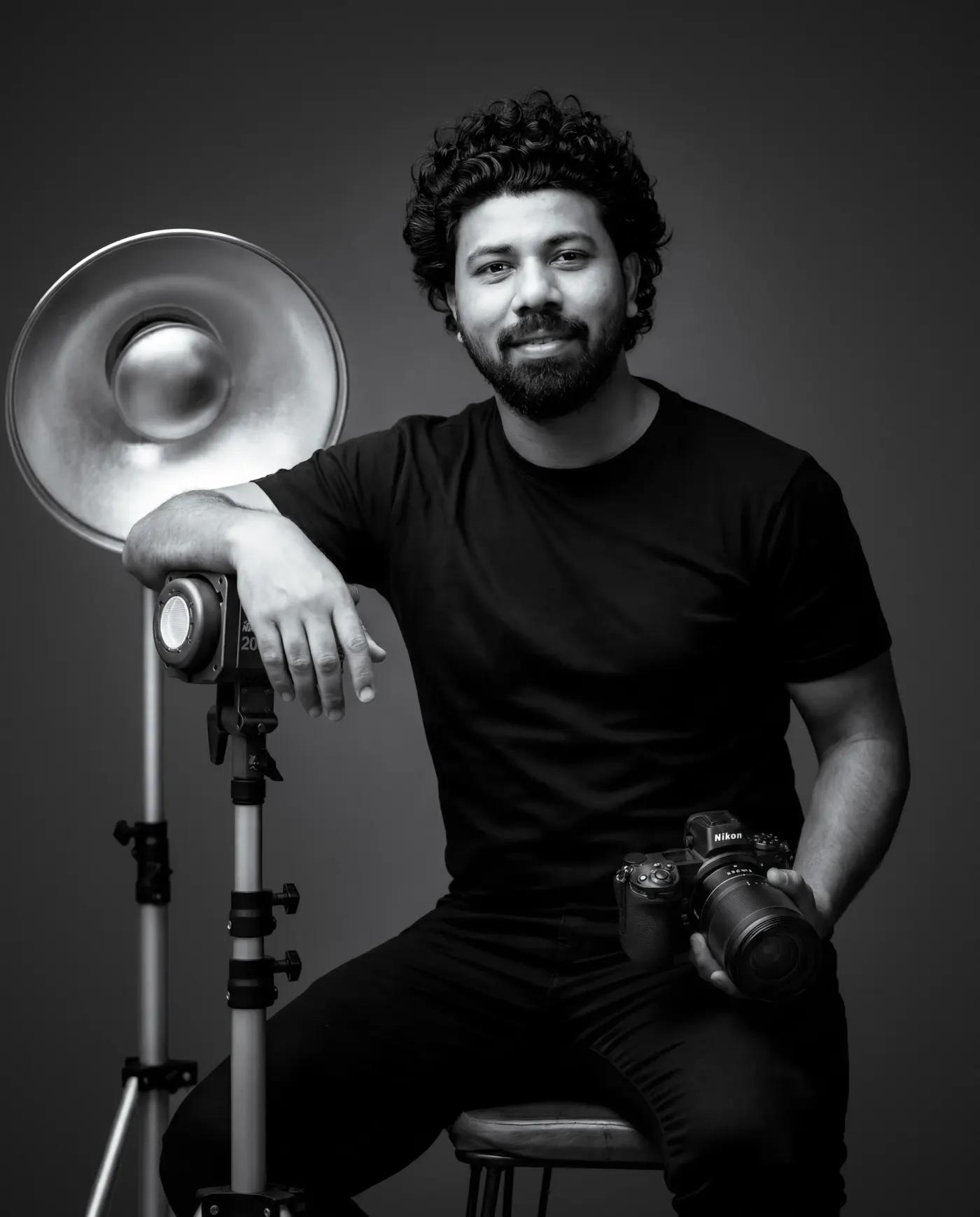
About the author
Rahul Chanda
Commercial product photographer based in Dehradun, India. 6+ years shooting product, food & beverage, and advertising campaigns with in-house retouching. Serving brands across Uttarakhand and pan-India.
View full profile →Need a Studio for High-Volume Product Shoots?
We run AI culling in our Dehradun studio for tethered product shoots, on-model e-commerce, and high-volume catalog work. The workflow lets us deliver 800-image catalog jobs in days, not weeks, with the same technical quality your marketplace compliance team expects.
Book Product Photography