
You're about to spend ₹20,000-₹1,00,000. Read this first.
Every quote sounds the same at the start. "High-end work, sir. Professional setup. Creative vision." Then the files arrive and the differences show up as colour drift between SKUs, three missing angles you specifically asked for, and the sentence "editing extra hai". The gap between photographers isn't talent — Dehradun has plenty of it. The gap is process.
What follows is the exact checklist I'd run if I were a brand owner hiring someone like me. It's written from the other side of the table on purpose.
1. Judge the portfolio like a buyer, not a fan
Don't ask "can I see your work" — everyone curates their five best frames from five best shoots. Ask this instead: show me the last 20 images you delivered, from the last six months, in my category.
Then look for one specific thing: consistency across a single client's catalogue. Can this photographer repeat — same light, same discipline — across 30 SKUs of shampoo bottles, not just one gorgeous hero? One beautiful frame is luck or taste. Thirty matching frames is a system, and systems are what you're buying.
Also check the category. Glass kills amateurs. Fabric kills amateurs. Food kills amateurs differently. If you sell honey and their portfolio is all sneakers, the learning curve is going on your budget.
2. Ask who actually retouches the files
This single question sorts the studios from the middlemen. If the photographer retouches in-house, colour decisions stay with the person who made them, revisions happen in a day, and "fix the label reflection" doesn't need a committee. If they send it out, you'll hear "editing 5-7 din me ho jayega" and the files will come back looking like they were processed by someone who has never held your product.
Ask to see one before/after pair from their actual pipeline — raw file next to delivered file. A studio that owns its retouching shows this without flinching.
3. E-commerce specs vs pretty pictures
A lifestyle shot for Instagram and a marketplace-ready packshot are two different trades that share a camera. Marketplaces have hard requirements: clean white background, correct margins, 1000px-plus on the long edge for zoom, true colour, no prop clutter on the main image. Ask the direct question: "Will I get white-background files at 2000px with margins that survive Amazon's zoom?"
If they blink, hesitate, or answer with "we do creative shots also, sir" — you're talking to a wedding photographer doing products on the side. Nothing wrong with weddings. But catalogue discipline is its own muscle.
4. What the quote should itemise
A professional quote reads like a grocery list, not a fortune cookie. It should state:
- — Day rate or per-image rate, and which one applies
- — Number of final retouched images per SKU
- — Styling and props — included, or billed?
- — Number of retouching rounds before it costs extra
- — File formats and sizes (raw? JPEG? web-optimised? print?)
- — Delivery deadline in working days
- — Usage rights: menu, social, marketplace, ads, print
Everything that isn't written down becomes a paid extra later. Every time.
5. The local advantage — and when it backfires
Shooting in Dehradun instead of couriering your stock to Delhi buys you three things: no courier risk to your inventory, reshoots that are a 20-minute drive instead of a fortnight of logistics, and a chair at the shoot itself. That last one matters more than people expect — a founder watching the shoot catches "that's not our colour" in take one, not in the delivery folder.
The honest exception: some categories need gear depth a small city studio may not hold — liquor glass at scale, jewellery macro, big set builds. Ask what they'd rent for your specific job and whether that rental sits inside the quote. A studio that answers this comfortably is a studio that has thought about your job, not just your money.
Red flags — walk away if you hear these
Portfolio is all moody lifestyle, zero clean packshots. They can't do the boring 80% of commercial work that pays your bills.
'Editing extra' appears after the advance is paid.
No written deliverables — image counts, formats and deadline are all verbal.
They haven't asked a single question about your customer or where the photos will be used. That's not curiosity, that's a shooting contract, not a thinking one.
Delhi-level pricing with no Delhi-level justification in the room.
Six questions to ask before you pay the advance
Show me the last 20 images you delivered — not the 5 you chose.
Who retouches, and how long does one revision round take?
What exactly is included — styling, props, retouching rounds, file formats?
Which usage rights do I get? Menu, social, marketplace, ads, print?
If a shot fails on set, who pays for the reshoot day?
Can I be present at the shoot?
The answers separate a studio from a guy with a camera in about ten minutes.
Full disclosure
I run a commercial studio in Dehradun, and yes — I'd like you to book me. But I'd rather you hired the right photographer than a convenient one. If you run this checklist and someone else in town clears it, hire them. The brands that come back to us come back because the checklist was clean, not because the ad was loud.
Frequently asked questions
What does a commercial photoshoot cost in Dehradun?
A basic 20-SKU e-commerce catalogue starts around ₹20,000 at a Dehradun studio. Regional studios typically price 30-50% below Delhi or Bangalore for equivalent quality. Complex work — glass, jewellery, campaigns — is quoted per project.
How do I verify a photographer's portfolio is real?
Ask for the last 20 delivered images from the past six months in your category, not the five curated ones. Consistency across one client's catalogue is the tell — repeating quality over 30 SKUs is far harder than one beautiful hero frame.
Should I ship products to a Delhi studio or shoot locally?
Local wins on logistics: no courier risk to your stock, reshoots are a short drive, and you can attend the shoot. The exception is when your category needs specialised gear the local studio doesn't hold — ask what would be rented for your job and whether it's inside the quote.
What should be included in a photography quote?
Day rate, final retouched images per SKU, styling and props, retouching rounds, file formats and sizes, delivery deadline in working days, and usage rights. Anything left verbal tends to become a paid extra later.
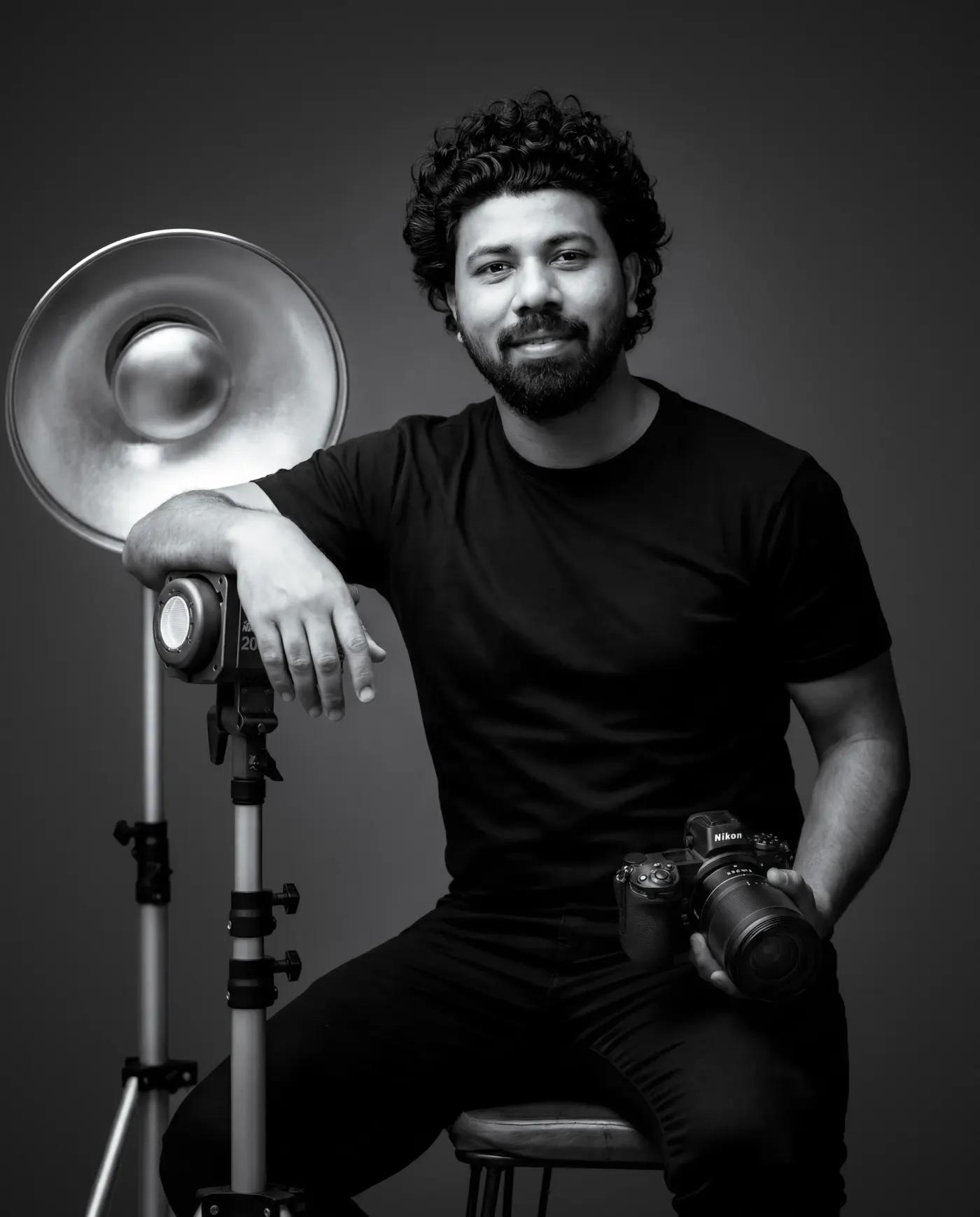
About the author
Rahul Chanda
Commercial product photographer based in Dehradun, India. 6+ years shooting product, food & beverage, and advertising campaigns with in-house retouching. Serving brands across Uttarakhand and pan-India.
View full profile →Run the Checklist on Us
Ask the six questions. See the last 20 delivered files. Meet the retoucher. If we clear the list, book a catalogue or campaign shoot with a studio that answers in writing — 30-50% below Delhi pricing.
Book a Commercial Photographer in Dehradun →