
Your product page is a shop with no shopkeeper
Walk into any shop in Paltan Bazaar and a person picks the product up, turns it around, answers your doubts, talks you past your hesitation. Your product page has none of that. The photograph does every job the shopkeeper used to do — it holds the thing, shows the label, answers "is this genuine", "will it look cheap on my shelf", "can I trust this seller".
And here's the part that stings. Most brands spend months perfecting the product and one afternoon on the picture of it. Then the ads run, the clicks arrive, nothing converts, and everyone blames the product. The product didn't fail. The shopkeeper did.
What buyers actually do: the zoom test
Open any Amazon listing and pinch-zoom to 100%. Serious buyers do this before paying, and phone photos die right there — soft edges, colour noise, a label that dissolves into grey porridge. Zoom is the closest thing online shopping has to picking a product up. If the image turns to mush, the trust your price and reviews built evaporates in two seconds.
A proper studio file survives that zoom. Label text legible. Texture true. Edges clean. That isn't vanity — it's the line between "looks like a brand" and "looks like a reseller working out of a store room".
The five things professional photography actually fixes
— Light
One controlled key, deliberate fill. Glass stops looking muddy, food stops looking flat, fabric shows weave instead of noise. Light isn't decoration — it's information.
— Colour
Calibrated capture, calibrated monitor, colour-checked retouch. The maroon that reaches a customer in Mussoorie looks like the maroon that left the studio. This one fix quietly kills your 'product not as described' returns.
— Consistency
Same angle, same exposure, same background across 40 SKUs. Try that with a phone and a window. A catalogue that matches itself reads as a brand; one that doesn't reads as a flea market.
— Detail
Macro crops, texture, scale references. The shots that answer the questions buyers would otherwise type into the Q&A box — or worse, into the returns form.
— Trust at price
Clean framing and a real shadow do something no caption can: they make the price feel fair. A ₹2,499 product photographed like a ₹499 one sells like a ₹499 one.
Where the sales lift actually comes from
"Better photos, more sales" is true, but lazy. The lift arrives through four separate doors, and it helps to know which one is leaking in your store:
Thumbnail click-through. Your listing fights twenty identical competitors on a search page. The cleaner, sharper thumbnail gets the click. Nothing else on your listing is visible at that size.
Page conversion. Once they're on the page, the images carry the whole argument — angle coverage, detail crops, scale. Fewer doubts, more add-to-carts.
Fewer returns. Most 'not as described' returns are photo problems wearing a product costume. The colour that lied, the texture that hid, the size that had no reference. Each return you prevent pays for itself twice over.
Cheaper advertising. The same ₹500 of ad spend converts better when the creative isn't the weak link. Your cost per order falls without touching the bid.
Add those doors together and the 30-70% conversion range stops sounding like marketing. It's four leaks getting sealed at once.
The honest bit: where phone photos are still fine
I make my living from studio shoots, and I'll still tell you this: a WhatsApp catalogue for your regulars, Instagram stories, an internal lookbook — a window, a white chart and a steady hand handle all of that. If your entire channel is 300 loyal customers who already trust you, spend the money on stock, not photography.
What a phone cannot do is hold consistency across 40 products under controlled light, or survive a buyer's zoom, or keep maroon from drifting pink between SKU 7 and SKU 8. The moment you're on a marketplace or running paid traffic, you've outgrown it. Know which job you're hiring the photo for.
The maths, in rupees
A ₹20,000 catalogue shoot for 20 SKUs works out to ₹1,000 per product. For most branded goods that's the margin on two or three units. Each SKU needs to sell two extra units — ever — and the shoot has paid for itself. Everything after that is profit sitting on assets you already own.
Compare that with what else costs ₹1,000 per SKU in this business: nothing, really. Packaging design is close. Ad spend never stops. The photographs are the only line item that keeps selling after the invoice is paid.
Frequently asked questions
How much does professional product photography increase sales?
There's no single honest number. Studios that replace phone photos with controlled, colour-accurate catalogue work commonly see product-page conversion move up 30-70%, with the biggest jumps on marketplaces where thumbnails compete side by side. Your category, price point and traffic quality decide where you land.
Is a professional shoot worth it for a small catalogue?
One clean hero image per SKU beats five weak ones. A basic 20-SKU catalogue starts around ₹20,000 at a regional studio — about ₹1,000 per product. Most branded goods recover that with two or three extra unit sales per SKU.
Can AI-generated product images replace a photoshoot?
AI backgrounds are fine for some social content, but marketplaces require images of the actual product. Generated imagery that misrepresents what ships drives returns and can breach marketplace image policies. Use AI in the pipeline — cleanup, variants, scaling — not as the source of truth.
How long does a professional product shoot take?
A standard e-commerce catalogue of 15-25 SKUs shoots in half a day to one studio day. Retouched, marketplace-ready files come back in 1-2 weeks including one revision round.
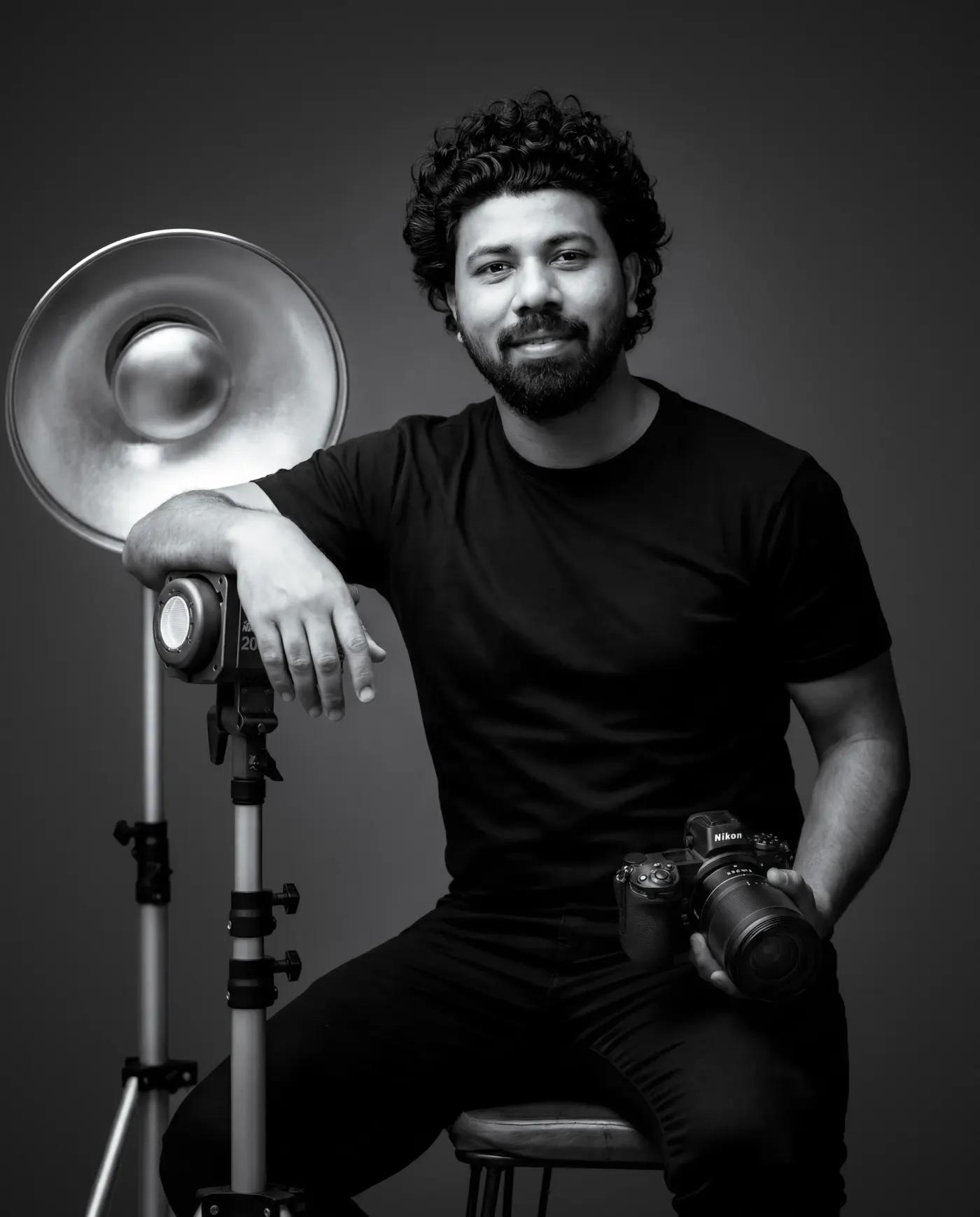
About the author
Rahul Chanda
Commercial product photographer based in Dehradun, India. 6+ years shooting product, food & beverage, and advertising campaigns with in-house retouching. Serving brands across Uttarakhand and pan-India.
View full profile →Ready to Stop Leaking Sales to Better-Lit Competitors?
We shoot e-commerce catalogues for brands across Dehradun, Uttarakhand and pan-India — marketplace-ready files, in-house retouching, 1-2 week delivery.
Get Professional Product Photography →