Will AI replace product photographers? After 12 months of AI tools on live commercial shoots: what genuinely accelerates production, and where physics and brand accuracy still demand a studio.
Key Takeaways
There is no shortage of headlines claiming that artificial intelligence will replace commercial photography entirely. Type a prompt into an image generator, and a slick image appears. But anyone running an actual retail, food, or e-commerce brand quickly discovers the fatal flaw: generative models do not photograph your physical product — they imagine an approximation of it.
A cosmetics brand cannot ship an image where the bottle pump is shaped differently or the ingredient typography is subtly garbled. An apparel brand cannot use an image where the seam stitching does not match the actual garment. In commercial advertising, accuracy is not a preference — it is a legal and commercial requirement.
Over the past year, we have integrated AI deeply into our studio workflow across Dehradun and Uttarakhand. Here is an honest assessment of how AI empowers commercial photography, and why the physical studio remains essential.
- Rapid Pre-Visualization and Moodboarding: Generating visual concept directions during pre-production to align with brand founders before lighting a single strobe.
- Post-Production Speed: Cutting days of repetitive dust removal, background extension, and masking down to hours. See our retouching techniques guide for details.
- Multi-Channel Asset Generation: Extending single studio hero shots into varied seasonal lifestyle backgrounds for social media campaigns.
1. Physical Product Fidelity: Real products have specific dimensions, label pantones, tactile packaging finishes, and unique tolerances. Only optical camera sensors can capture true product reality.
2. Optical Lighting Physics: Light bouncing through a glass perfume bottle, casting caustic patterns on stone, or defining the crisp bevel of a luxury timepiece obeys the laws of physics. Physical studio modifiers sculpt light with an intentionality that prompting cannot replicate. See our breakdown of product lighting patterns.
3. Brand Cohesion Across Catalogs: An e-commerce catalog with 50 SKUs requires consistent perspective, horizon lines, and color accuracy across every item. AI generators drift constantly from one generation to the next.
4. Creative Art Direction: The decision of whether a luxury watch should feel dark and moody or crisp and technical is a strategic brand positioning choice that requires human understanding.
For ambitious brands in Dehradun, Haridwar, Rishikesh, and across India, the winning formula is a photographer who masters both traditional studio craft and modern digital acceleration. Explore our commercial photography in Dehradun or browse our portfolio to see our work in action.
AI image generators approximate a product from a prompt — they do not photograph your actual SKU. Packaging typography drifts, pump shapes change, stitching patterns invent themselves. For e-commerce and advertising, where the image must match the physical product, real photography remains mandatory.
Post-production cleanup, batch masking, background generation for secondary lifestyle imagery, and video repurposing. In our studio these cut turnaround measurably — while capture, lighting, and art direction remain unchanged.
It depends on the tool's training data and licensing terms. Commercially safe models (like Adobe Firefly) exist, but brands still carry the risk of similarity to existing products or trademarks. Photographing the real product eliminates that legal exposure entirely.
Shoot the real product for hero and catalog accuracy; use AI for scene variation, backgrounds, and fast social-format derivatives — always composited under the same light physics as the original capture.
About the author
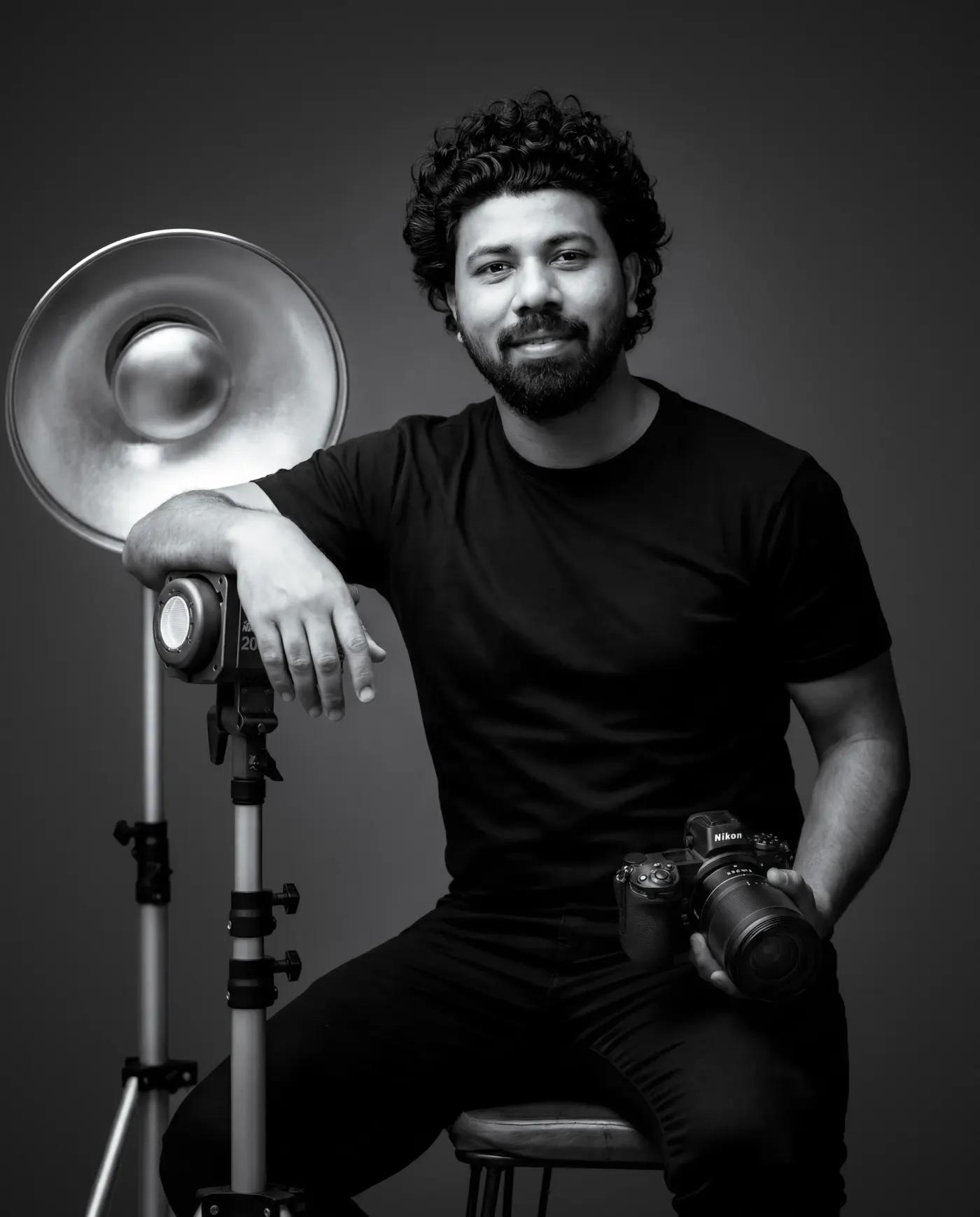
Commercial product photographer based in Dehradun, India. 6+ years shooting product, food & beverage, and advertising campaigns with in-house retouching. Serving brands across Uttarakhand and pan-India.
View full profile →AI product backgrounds done right: match key-light angle, hardness, and color temperature before you shoot, then composite with a three-pass pipeline that never looks fake.
AI & PhotographyAI upscaling for e-commerce product images: when Topaz Gigapixel safely rescues legacy assets, when Magnific hallucinates textures that kill trust, and the zoom standards that matter.
GuidesCommercial photo retouching explained stage by stage: culling, ColorChecker color calibration, non-destructive cleanup, frequency separation, and multi-format delivery.
Serving brands across Dehradun, Uttarakhand, and pan-India.
Partner with a dedicated commercial photographer →